
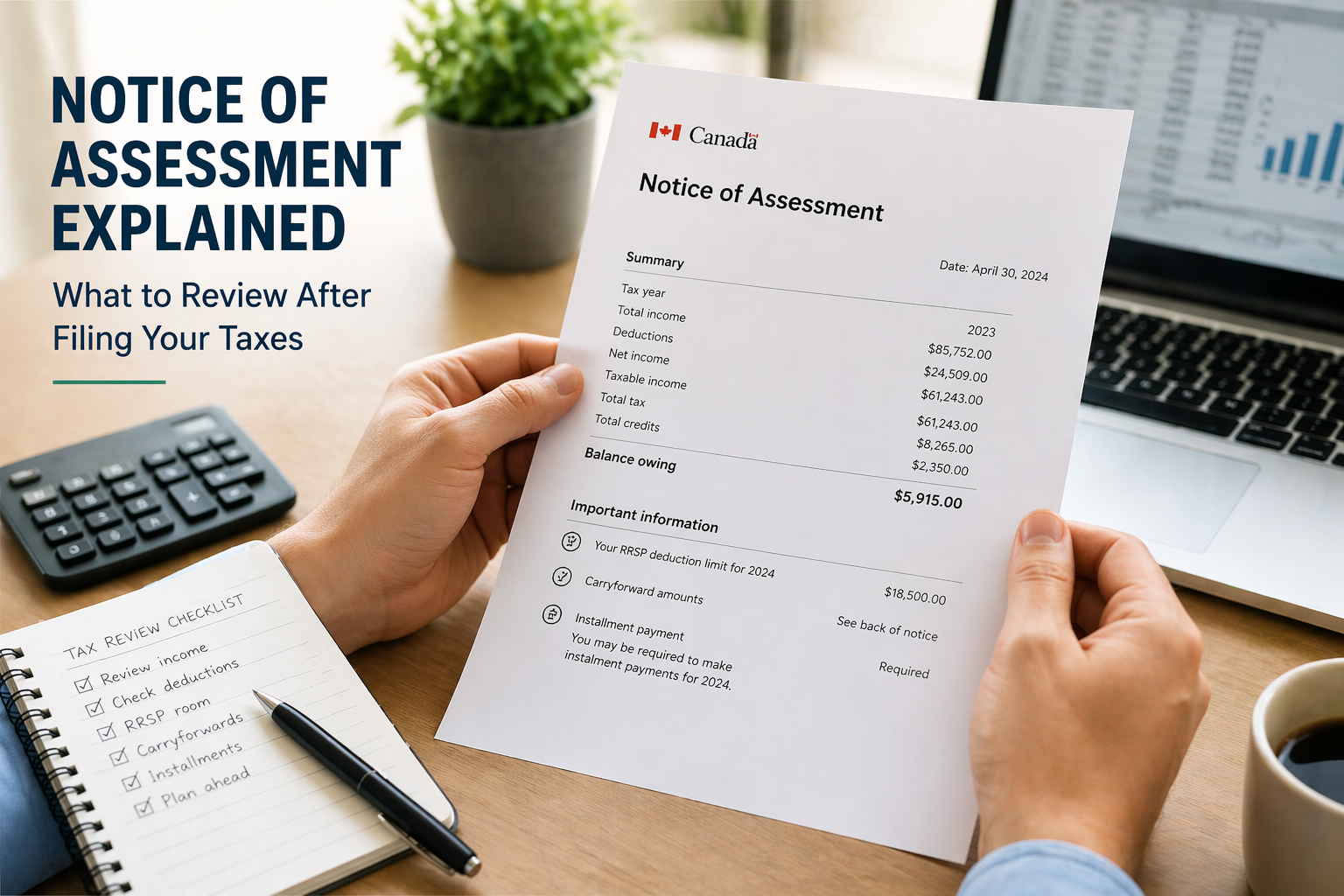
After your tax return is filed, the next important step is reviewing your Notice of Assessment (NOA) from the CRA.
Many taxpayers receive it — and then ignore it.
But your NOA contains important information that can impact your future tax planning.
What Is a Notice of Assessment?
Your NOA is the CRA’s official summary of your tax return.
It confirms:
- Your income
- Your deductions and credits
- Your final tax balance
- Any changes made by the CRA
What Should You Review?
1. Compare It to Your Filed Return
Make sure the numbers match what was submitted.
If there are differences, CRA may have:
- Adjusted a claim
- Removed a deduction
- Added missing income
2. Check Your RRSP Contribution Room
Your NOA shows your updated RRSP deduction limit.
This helps with:
- Future tax planning
- Avoiding over-contributions
3. Review Carryforward Amounts
Check:
- Tuition credits
- Capital losses
- Other unused amounts
These can reduce future taxes.
4. Look for Installment Requirements
CRA may indicate that you need to start making quarterly tax installments.
This is common if:
- You owe more than $3,000
- You are self-employed
- You have investment income
Common Mistake
Many people assume their return is final once filed.
But if CRA makes adjustments and you don’t review them, you could:
- Miss errors
- Lose deductions
- Miss planning opportunities
What to Do Next
- Review your NOA carefully
- Contact your accountant if something looks off
- Keep it for your records
- Use it for future planning
Final Review
Your Notice of Assessment isn’t just a confirmation — it’s a planning tool.
Taking a few minutes to review it now can help you avoid surprises later.