Filing T1s for Owner-Managers: What Your Accountant Needs (and When!)
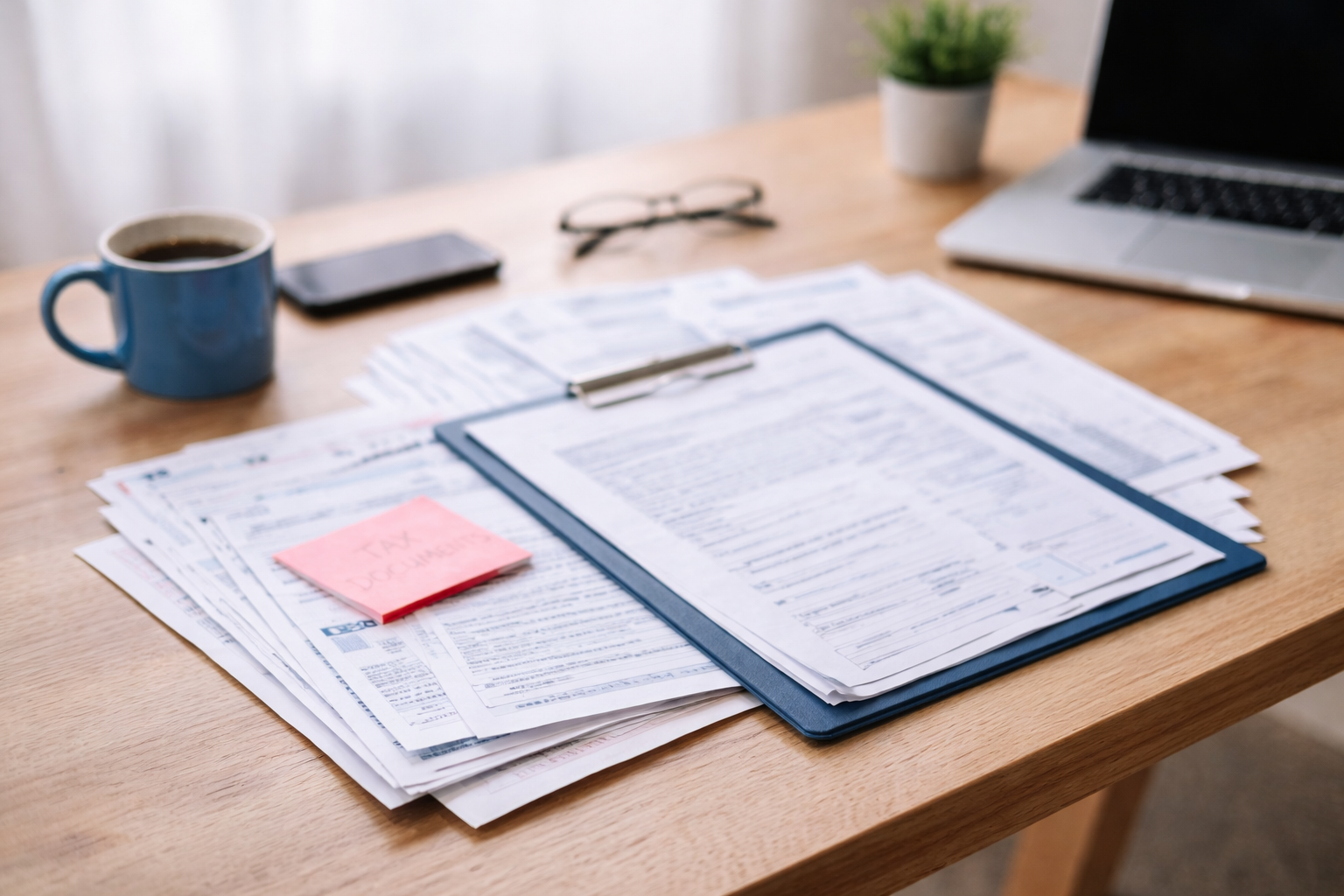
T1 filing for owner-managers is a critical part of personal tax compliance for Canadian business owners who operate through a corporation. While your corporate T2 return reports business income, your T1 Personal Income Tax and Benefit Return captures all personal income—salary, dividends, capital gains, benefits, and other taxable sources.
Even if most income flows through your corporation, T1 filing for owner-managers is still usually required by April 30 each year, along with payment of any personal tax owing. Filing accurately and on time depends on having the right documentation prepared well in advance. If you or your spouse are operating as a sole proprietorship (unincorporated with self-employment income on your personal return) then you filing deadline is June 15th; however, the payment deadline for any taxes owing remains as April 30th. So best practice remains to file before the April 30th payment deadline, even for those with self-employment income.
Tax Slips Required for T1 Filing for Owner-Managers
Tax slips are issued by employers, financial institutions, government agencies, and other payers to report taxable amounts received during the year. These slips generally fall into three broad categories:
1. Employment & Post-Employment Income
Includes wages, pension, retirement income, and EI:
- T4 – Statement of Remuneration Paid,
- T4A / T4A(P) / T4A(OAS) – Pension & other income,
- T4E – Employment Insurance benefits,
- T4RSP / T4RIF – Registered savings income, and
- T4FHSA – First Home Savings Account withdrawals.
2. Investment Income
Includes dividends, interest, and investment trust distributions:
- T5 – Investment income (interest/dividends),
- T5008 – Securities transactions (proceeds only),
- T3 – Trust income (mutual funds, ETFs, REITs), and
- RRSP / PRPP contribution receipts.
3. Other Income to Report on a T1 for Owner-Managers
Covers benefits, grants, tuition, and contract-based work:
- T5007 – Social benefits,
- T5013 – Partnership income,
- T5018 – Contract payments (e.g., construction),
- T1204 – Government service contracts,
- RC62 / RC210 – Child benefits, working income benefits, and
- T2202 – Tuition and education amount certificate.
You should receive all slips by the end of March. If the issuer has filed them with CRA, they’ll be available in your CRA My Account.
Owner-Manager Dividends
If you earned dividends – whether from public markets, private corporations, or through trusts – your accountant will need the related slips. These may include:
- T5 – Dividends from public companies, banks, brokerages,
- T3 – Distributions from mutual funds, ETFs, REITs (must be reported even if reinvested), and
- T5013 – Dividends earned through partnerships.
Note: Private corporations that pay dividends do not issue T-slips. If you received dividends from a private company, you’ll need to self-report them on Schedule 3 of your T1 personal tax return. Be sure to retain supporting documents, such as board resolutions or dividend declarations, in case the CRA requests them.
Capital Gains
Capital gains arise from disposing of capital assets – like real estate, stocks, ETFs, or even cryptocurrency, depending on how it’s used.
Gains may be reported through:
- T5008 – Sale proceeds from securities or crypto (note: no ACB is included, so keep your own purchase records),
- T3 – Capital gains distributed by mutual funds and trusts, and
- T5013 – Gains realized within partnerships.
Note: Private company shares do not generate a T-slip when sold. If you dispose of such shares, you’ll need to report the gain or loss manually on Schedule 3 of your T1 return. Be sure to maintain detailed documentation of your Adjusted Cost Base (ACB) and the proceeds of disposition, such as purchase agreements, shareholder ledgers, and sale contracts. These records are not submitted with your return but may be required by the CRA for verification.
Business Use-of-Home Expenses and T1 Filing for Owner-Managers
Home office claims must be handled carefully to avoid double deductions. Only one option is to be chosen.
Option 1: Corporation Claims on the T2
The corporation can claim a reasonable share of home office expenses in one of two ways:
a) Reimbursement
- The corporation reimburses you personally for business-use-of-home expenses,
- You must maintain detailed records (square footage, usage, bills), and
- The reimbursement is typically non-taxable.
b) Rent
- You charge the corporation a reasonable rent,
- The corporation deducts this as a business expense, and
- You must report the rent as rental income on T1 (Form T776), deducting a proportion of home costs.
In both cases:
You cannot also claim the same expenses on your personal T1 – that would be double-dipping and is not allowed by CRA.
Option 2: Claiming Home Office Expenses on the T1
You can claim a workspace-in-the-home expense on your T1 only if:
- You’re an employee of a corporation (including your own),
- You worked from home more than 50% of the time, and
- The corporation signs a T2200 – Declaration of Conditions of Employment.
In this case, the claim is made on line 22900 of your T1 return.
But again: if your corporation already deducted the expenses, you cannot claim them again personally.
Wrap-Up Checklist for T1 Filing for Owner-Managers
When preparing your T1 return, be sure to collect:
- All tax slips (T4, T5, T3, T5008, etc.),
- Dividend or capital gain statements from private companies,
- Crypto transaction logs, if relevant,
- Records of any reimbursements or rents paid by your corporation, and
- A signed T2200, if you’re claiming personally.
Tax Season Doesn’t Have to Be a Headache
If you’re running a corporation and wondering how to handle your T1, dividends, home office write-offs, or capital gains – engage a professional to help you ensure you meet your obligations.
Note: We are currently waitlisting corporate clients and not accepting personal tax clients only. We hope to open up our onboarding list in May of 2026. To get on our wait list. Please use our contact us page or email info@vhaccounting.ca.